
Showing posts with label well-being. Show all posts

Wednesday, January 16, 2019

Would You Travel Alone?


I would and I did! I was 17 the first time I went to the US on my own. This time though I went to the UK and Spain.

As I sit comfortably at the airport waiting to board the plane that will take me back home I can honestly say I love traveling.

From the "What if I made a trip?" part to the going back home flight, I truly enjoy every bit of it. Actually one of my happy places is the airport. Yup, dreaded by many loved by few. I'm one of the lucky few! I absolutely enjoy the airport experience. I always want to arrive early so that I can relax, have a cup of coffee, and finally, la pièce de résistance: explore the duty free shop!

Today I savoured the “happy place” like never before. I left the hotel at 6 pm and although my flght leaves at 11:50 pm, I went straight to the airport. Ahh... those hours flew by. I'm about to board the plane any minute now. 

I've had enough time for perfume testing and chocolate buying. I also had a heavenly coffee + donut combo. 


But enough about my happy place. Let's talk about traveling solo.

Why Travel Alone?


1) It's liberating. 

You can literally do whatever you want. After all, there's only you there, so you better do that which only you feel like doing! Like visiting the Goop store in Notting Hill...

Literally, you can walk around Notting Hill streets all day long if you feel so inclined.


Or spend a whole afternoon learning how each and every painting came to be at the Museo del Prado in Madrid.


Or just listen to live street music 🎼in Barcelona's Gothic Neighborhood.



2) It's empowering. 

You are in charge of what, when, where, and how regarding absolutely every single event during that trip. Empowerment and responsibilities go hand in hand though, meaning there's nobody there to remind you of important check out times, flights and hotel reservations. Totally doable if you ask me. Just keep good track of those specific things and problem solved.

Did you arrive on a Kings Day in Barcelona and the taxi cannot reach your hotel because streets are closed and there's people everywhere watching the Parade? You walk baby...yes with all the luggage. 


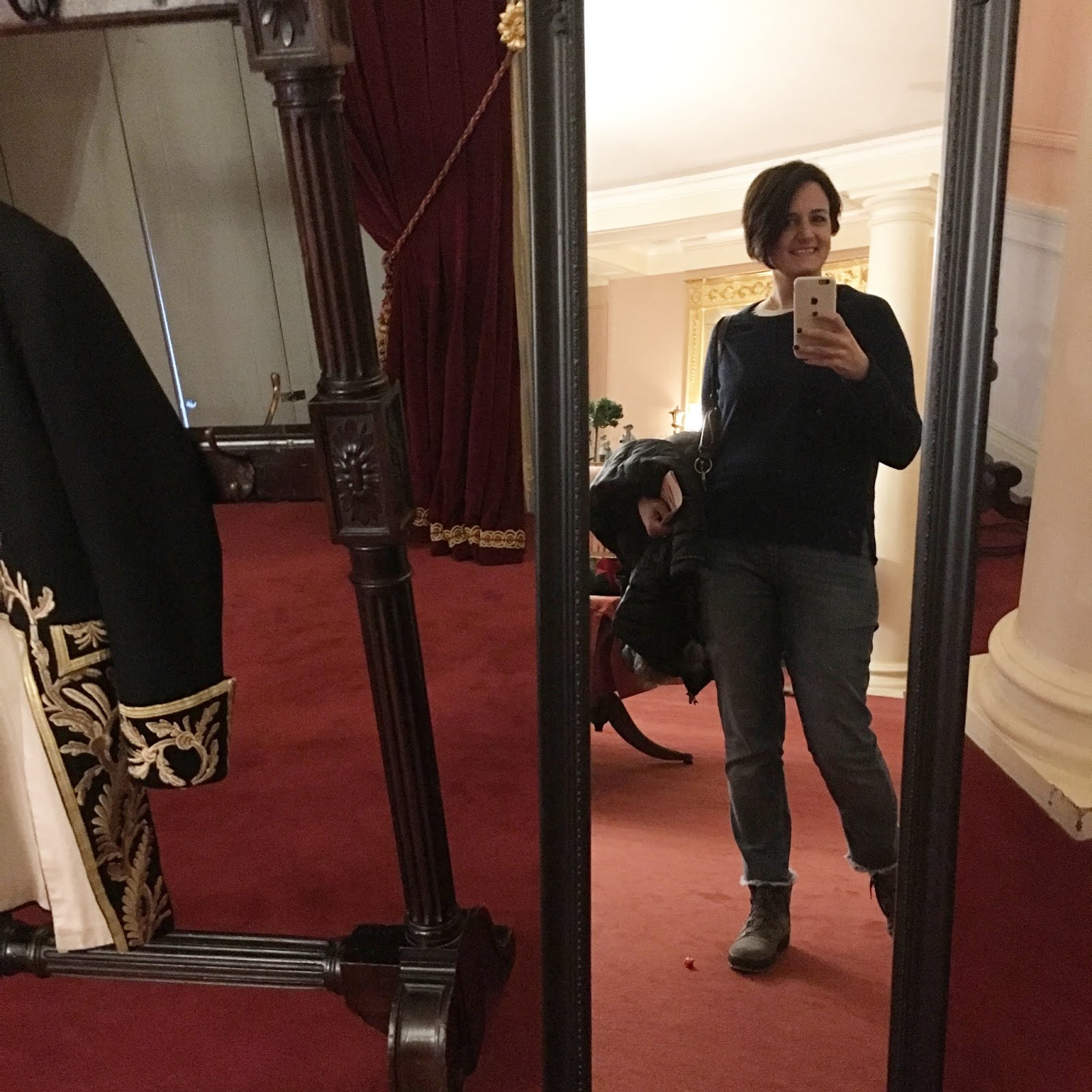
But then again, keep in mind that on the plus side you can take the ultimate #ootd photo at Kensington Palace without potentially being frowned upon by fellow family members...



3) Adapt, learn, and evolve. 

Challenges, unforseen circumstances or last minute changes can happen. A great way to learn and improve. 

If you tend to be more of an extrovert you might feel a bit lonely at times but you can always hire a guided tour, meet fellow travelers and chat away. Regardless of where you go I'm pretty sure you'll find a wide array of tour modalities available.

4) No need to plan too much or follow a schedule. 

Just wake up, and ask yourself what you feel like doing that day over breakfast. "Yourself" can be very kind with you and will do whatever you prefer. 

Me: "I should go to Harrods".

Also me: "Definitely, Harrods it is!"

I didn't have to even make a point of it being decorated for Christmas or anything of the sort. 


5) Know thyself. 

You learn a lot about YOU while traveling solo. You discover what you really enjoy sans the kids, husband, significant others, etc.

Have you ever traveled alone?

P.S. This is me and myself in Barcelona talking about traveling alone and about my interview with Balance Psychologies. The Interview will be a three video series coming up next week on my YouTube channel! Please do subscribe so you don't miss this series. It's going to be awesome.


Friday, September 21, 2018

Sleep & The Circadian Rhythm. Fill Your Cup Friday.


How many hours do you usually sleep? I'm a 6 to 7 hours of sleep kinda girl. 

I remember, growing up, I could never sleep more than 9 hours, 10 very rarely. And then when I became a mom something switched inside my brain. The thought of having an amazingly cute and tiny human being that depends on you for its sustenance made me remain so much more alert during the night.   


I still have that muscle even though my youngest is 12 and he definitely doesn't need me during the night! But still... The alertness is there. One of the many mom muscles that we didn't know we had, I suppose. 


What are the Recommended Hours of Sleep?

Younger Kids 9-11

Teenagers 8-10
Adults 7-9

 What is the Circadian Cycle of Wakefulness and Sleep?


It's your body's internal rhythm that helps determine when you fall asleep and when you wake up. This internal clock controls biological patterns, blood pressure, the release of hormones, and even body temperature.


In today's video I talk a bit more about this and three other components of sleep that have a lot to do with the science of sleep, along with a few natural remedies I tend to gravitate to. 


I'm curious to know, what are your tricks for a good night sleep? 


Friday, September 14, 2018

Benefits of Walking. Fill Your Cup Friday.


Find today's video here.                                                                

I love to go for walks. I feel like it’s a mild exercise that clears my mind and gives me a chance to listen to podcasts. I always feel better after a good walk in nature, ideally, and if not, just around my neighborhood. However I felt I wasn’t committed to walking periodically until the other day, my lifelong friend told me she goes for a walk daily, right after she drops the kids at school. And so I felt inspired by her commitment to walk more regularly.  

Now, let me tell you, I’m not going for walks absolutely every day. I have a problem with commitment to working out. But I must say I’m doing pretty good.

So I hope I can inspire you to do the same, especially if you are recovering from narcissistic abuse! Do it! In nature if possible, if nature is not easy to access, any extra step that you can add counts. It's all good when it comes to walking!


What are the Benefits of Walking?

1) Your Mood Improves

It’s what I would prescribe for clients fighting signs of depression, recovering from narcissistic abuse, or even when it comes to winter blues. Research shows that regular walking modifies your nervous system and reduces anger and hostility. Plus you get some Vitamin D from the sun.  

2) It Boosts Your Creativity.

Feel stuck? go for a walk.

3) Great for the Heart and Chronic Disease.

4) You Tend to Reach For Healthier Foods When You Get Into a Routine.

5) Your Jeans Fit Better!


A Harvard Study:

"1. It counteracts the effects of weight-promoting genes. Harvard researchers looked at 32 obesity-promoting genes in over 12,000 people to determine how much these genes actually contribute to body weight. They then discovered that, among the study participants who walked briskly for about an hour a day, the effects of those genes were cut in half.
2. It helps tame a sweet tooth. A pair of studies from the University of Exeter found that a 15-minute walk can curb cravings for chocolate and even reduce the amount of chocolate you eat in stressful situations. And the latest research confirms that walking can reduce cravings and intake of a variety of sugary snacks.
3. It reduces the risk of developing breast cancer. Researchers already know that any kind of physical activity blunts the risk of breast cancer. But an American Cancer Society study that zeroed in on walking found that women who walked seven or more hours a week had a 14% lower risk of breast cancer than those who walked three hours or fewer per week. And walking provided this protection even for the women with breast cancer risk factors, such as being overweight or using supplemental hormones.
4. It eases joint pain. Several studies have found that walking reduces arthritis-related pain, and that walking five to six miles a week can even prevent arthritis from forming in the first place. Walking protects the joints — especially the knees and hips, which are most susceptible to osteoarthritis — by lubricating them and strengthening the muscles that support them.
5. It boosts immune function. Walking can help protect you during cold and flu season. A study of over 1,000 men and women found that those who walked at least 20 minutes a day, at least 5 days a week, had 43% fewer sick days than those who exercised once a week or less. And if they did get sick, it was for a shorter duration, and their symptoms were milder."

*Harvard Health Publishing

So next time you find yourself looking for the nearest parking space to the store, go wild and leave the car a little further away. Your body will thank you.


Monday, April 16, 2018

How to Identify Narcissistic Emotional Predators


I've been thinking a lot about whether I should write and talk about narcissistic abuse for almost a year now. 

Being a Professional Counselor I felt like I had to step up and do it.  This is such a dangerous and damaging epidemic that I feel like I need to contribute in any way I can to prevent people at risk of falling prey to emotional manipulators, and help present victims break free from this horrible emotional abuse prison.

The video is self explanatory and I hope you find it interesting. I believe that sharing information like this could be beneficial to a lot of people out there. 

Thank you for watching and reading,

Alu

Wednesday, March 9, 2016

How To Practice Caring Mindfulness: Cultivating Loving Kindness


In previous posts, I commented on why altruism is a win-win situation. How can we implement this in our practice for well-being?

Given that the benefits are clearly measurable, psychologists and therapists are turning to meditations that include loving kindness, and compassion.


Why cultivate loving kindness?

Because the practice of mindfulness, by itself, can be used incorrectly, and deviate from its original purpose, which is, not only to increase our well-being, but also that of others, and the place we live in: our planet. 

Matthieu Ricard wrote:
"A calm and clear mind is not in and of itself, a guarantee for ethical behavior. There can be mindful snipers and mindful psychopaths who maintain a calm and stable mind. But there cannot be caring snipers and caring psychopaths."

Compassion and neural changes.

Several studies have shown the benefits of practicing caring mindfulness. This one study in particular, led by positive psychologist, Barbara Frederickson, shows clear cut findings: 
"The practice of LKM (loving kindness meditation) led to shifts in people's daily experiences of a wide range of positive emotions, including love, joy, gratitude, contentment, hope, pride, interest, amusement, and awe. These increases in positive emotions were evident both within the trajectories of change in daily emotions over the span of 9 weeks and within a detailed analysis of a given morning 2 weeks after formal training ended."
The 140 adults who participated in this study also showed improvements in physical health.

Ricard puts it this way,
"Meditation gives you inner strength and confidence, and if you don't feel vulnerable, you can put that to the service of others. So it's not just about sitting and cultivating caring mindfulness. It's building up a way of being and then using it for the service of others."

Here's how you do it.

Got 9 minutes and 20 seconds to spare? 

UCLA (University of California, Los Angeles) to the rescue! I like this loving kindness meditation  because it's very easy to follow and it leaves you with a good mood, and a sunny disposition. I hope you give it a try and let me know how it went! 


P.S. How to practice a Body Scan? and Mindful Eating.


Tuesday, July 21, 2015

Cultivating Well-being: An Antidote to Anxiety


Cultivating Well-being series' third post is focused on worrying and anxiety. I wanted to let you know about a very effective technique that we can all implement. It's deeply related to our innate ability to become aware of our emotions.

Last Tuesday's post was about 5 ideas that are crucial to well-being. One of them was to limit negative thoughts and worrying. 

But, how do we do that? Easier said than done, right?

Well, it turns out it is not that difficult. The answer? Mindfulness and awareness. What is mindfulness? 


"..a mental state achieved by focusing one's awareness on the present moment, while calmly acknowledging and accepting one's feelings, thoughts, and bodily sensations, used as a therapeutic technique."

It's a simple and powerful tool that all of us can put into practice, that is used to become aware of our emotions. In this case, destructive ones, such as jealousy, anger or anxiety. 

Usually, those who suffer from anxiety, get carried away by negative thoughts and fear which will only lead to more anxiety and worry. 

The best way of dealing with it would be to first, realize what it is that you are feeling: anxiety. Once you recognize this emotion, a complete shift occurs. You become aware of it. This is when a space or distance is created between what you feel and yourself. It's as if you are contemplating the emotion.

This simple change of state has the power, if sustained, to decrease and eventually vanish the damaging emotion.

Matthieu Riccard explains this very clearly when he says that, if you stop adding wood to a fire, it will eventually extinguish. Same thing with the preoccupation that makes you anxious. 

If you look at what you are feeling with the "eye of the Mind", also known as "your consciousness", you become aware. 

Now, you have the power to direct your thoughts. This is the time to guide thoughts to a calmer, more positive state. As Riccard says:"if you are aware of it, you are not [anxious], you are aware of it". 

Apparently, it requires practice and lots of focusing on your breathing! But it can be done. Well-being is a skill that can be learned through practice. 

I thought I would share the good news. Well, actually those who meditate have known this for ever, but only recently, not many years ago, psychology has been incorporating these types of techniques to their practice.


P.S. Cultivating Well-Being #4 (Why Altruism Works For Our Own Good?)